Where did the injury happen?
Fault rules, deadlines, insurance, damages, dog-bite laws, and filing steps can change by state. Choose the state to open the right legal-source guide and carry that location into the confidential intake.
Short answer
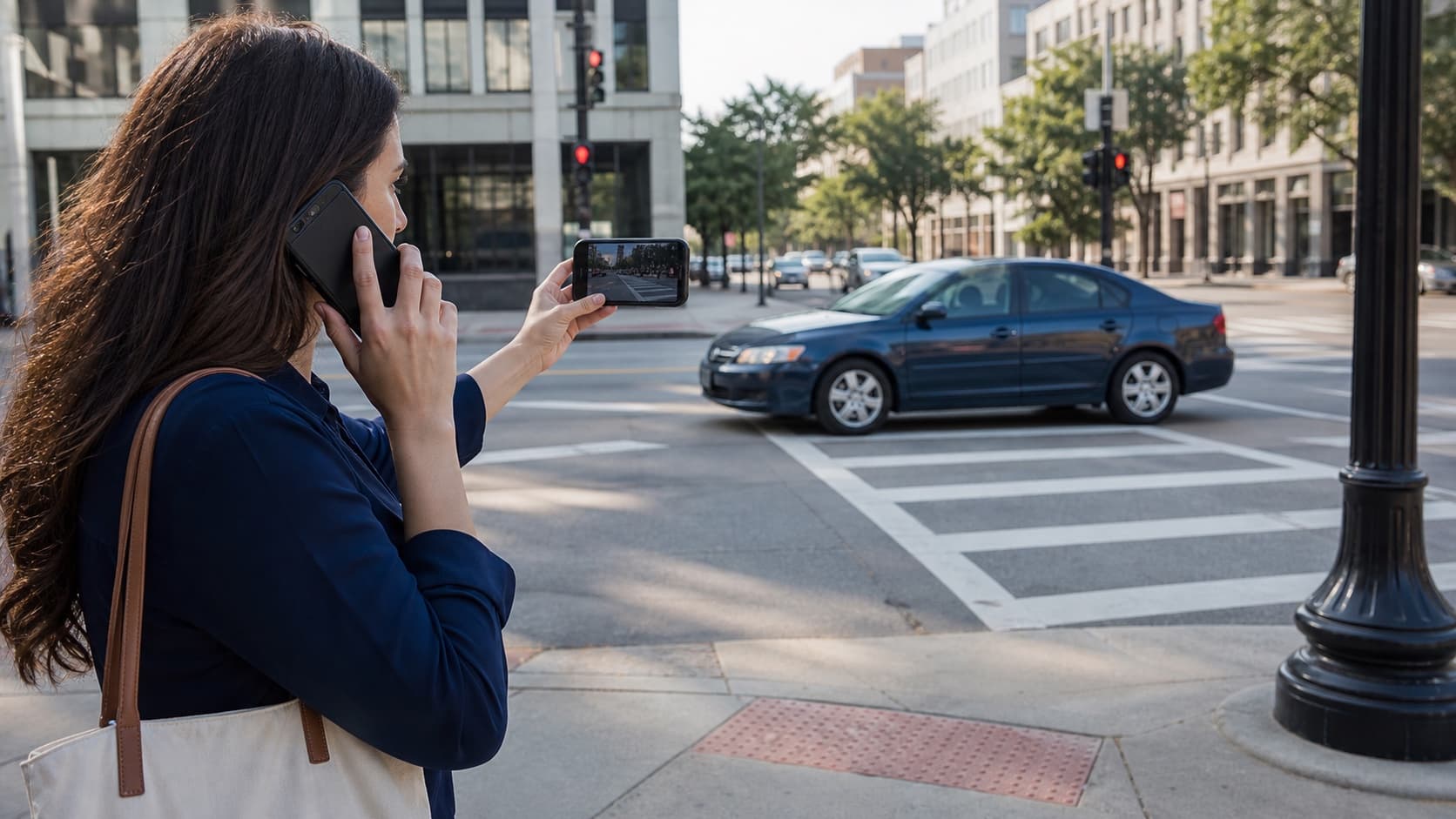
If you were hit while walking, get medical help, call police, photograph the area, save shoes and clothing, identify cameras, collect witness information, and avoid assuming you are at fault.
What to save now
- Photograph the crosswalk, sidewalk, driveway, parking-lot layout, traffic controls, lighting, debris, and vehicle damage.
- Save the police report number, driver and insurance information, witness names, shoes, clothing, and medical records.
- Write down every nearby store, home, bus, building, or traffic camera that may have recorded the impact.
Pedestrian cases depend on scene evidence
Crosswalks, traffic lights, stop signs, parking lot layouts, driver visibility, lighting, and speed all matter. A driver may claim the pedestrian came out of nowhere, but scene photos, video, and witness statements can challenge that story.
NHTSA pedestrian safety materials are useful because they explain the public safety context around people walking near vehicles. In an individual case, the key is proving what happened at that specific location.
Injuries may be severe even at low speeds
Pedestrians have no vehicle frame, seatbelt, or airbag protection. Falls to the ground can cause fractures, head injury, spine injury, shoulder injuries, knee injuries, and long recovery periods.
Do not accept blame too quickly
Drivers and insurers may blame the pedestrian. Comparative fault may be disputed, but that does not mean there is no claim. Evidence about speed, distraction, failure to yield, lighting, and road design may matter.
How an injury claim and lawsuit usually move forward
Most matters begin with a confidential intake, conflict check, deadline review, investigation, medical-document collection, and insurance analysis. A lawyer may send preservation notices, request reports and records, interview witnesses, inspect physical evidence, identify every potentially responsible party, and evaluate whether experts are needed. A claim or demand may be presented before a lawsuit when the facts, medical condition, damages, and available coverage are sufficiently documented.
Filing a complaint begins the formal court process. The defendant is served and can answer, assert defenses, or challenge part of the case. Discovery may include written questions, document requests, depositions, subpoenas, inspections, medical examinations, and expert disclosures. Courts can decide legal issues in motions, while disputed facts may be reserved for a judge or jury. Negotiation and mediation can occur at several points, and many cases resolve without trial.
A settlement should be evaluated by the amount the client will actually receive after attorney fees, case costs, medical bills, liens, benefit reimbursement, and any funding payoff—not just the headline number. If the case goes to trial, the result depends on admissible evidence, governing law, credibility, judicial rulings, and the factfinder. Appeals generally address claimed legal error rather than starting the factual case over.
What compensation can include—and what has to be proved
Depending on the state and claim, recoverable damages may include reasonable medical expenses, lost income, reduced earning capacity, property loss, future care, pain, physical limitations, scarring, and other legally recognized harm. Wrongful-death, survival, workers' compensation, medical-negligence, government, and product cases can use different categories or limits. Punitive damages are not automatic and generally require a separate legal basis.
Proof matters as much as the category. Bills show charges but do not answer every question about necessity, payment, liens, future needs, or causation. Wage records, tax returns, schedules, employer statements, vocational evidence, photographs, journals, treating records, and qualified expert opinions can help document the economic and human impact. Prior conditions should be disclosed accurately so a lawyer can distinguish baseline health, aggravation, and unrelated problems.
Pre-settlement funding is optional and can reduce the net recovery
Some injured people consider an advance tied to expected case proceeds because they cannot work or are facing urgent bills. These products may be marketed as non-recourse funding rather than ordinary loans, and state treatment and contract terms vary. The label does not tell you the total cost. Ask for the complete agreement and a payoff table showing every fee and the dollars owed after several possible case durations.
Compare simple and compounded charges, time blocks, broker or origination fees, caps, assignment terms, dispute provisions, the result if the case recovers nothing, and whether the funder can influence settlement. Also compare hardship programs, insurance or disability benefits, provider payment plans, credit-union options, family assistance, and a smaller advance. Your lawyer can review how the agreement affects the case, but the financial choice should be made only after you understand the possible payoff and remaining net recovery.
Deadlines and legal rights are state-specific
Statutes of limitation are only part of deadline analysis. Accrual, discovery rules, presuit notice, government claims, medical negligence, minors, death, workers' compensation, product statutes, contractual terms, service, and tolling can change what must happen and when. Settlement discussions and insurance claims do not necessarily stop a filing deadline.
Use national pages for the framework and verified state pages for primary statute and court links. Then ask a lawyer licensed in the relevant state to calculate the actual deadline from the event date, claim type, parties, and current law. Do not wait for treatment to end or for an insurer to finish its review before asking.
Common questions
What if I was not in a crosswalk?
You may still have a claim depending on the facts. Drivers must use reasonable care, but the location, visibility, speed, traffic controls, and state law all matter.
What if a car hit me in a parking lot?
Parking lot pedestrian claims can involve driver inattention, poor visibility, backing accidents, unsafe property layout, or lack of warnings. Photos and video are especially important.
What evidence helps a pedestrian accident case?
Photos, witness names, police report, medical records, camera locations, shoes, clothing, crosswalk signals, lighting, and vehicle damage can all help.
Sources and references
This guide uses primary public sources for safety, medical, regulatory, and insurance context. State law and individual facts can change the legal answer.
- NHTSA pedestrian safetyNational Highway Traffic Safety Administration
- CDC traumatic brain injury basicsCenters for Disease Control and Prevention
- Civil cases in the federal courtsAdministrative Office of the U.S. Courts
- Personal loans consumer resourcesConsumer Financial Protection Bureau