Where did the injury happen?
Fault rules, deadlines, insurance, damages, dog-bite laws, and filing steps can change by state. Choose the state to open the right legal-source guide and carry that location into the confidential intake.
Short answer
Get necessary medical care, report the event through the proper North Dakota channel, preserve scene and category-specific evidence, notify the appropriate insurers, and avoid guessing or signing a release before North Dakota Century Code Title 39, Motor Vehicles, the policies, and current law are reviewed.
What to save now
- Record the exact North Dakota date, time, location, route or address, people, companies, agencies, vehicles, animals, products, property, and sequence involved.
- Preserve crosswalk and signal timing, sight lines, lighting, speed evidence, cameras, witnesses, clothing and personal items, vehicle damage, phone records, and roadway plans.
- Keep medical instructions, imaging, referrals, restrictions, prescriptions, bills, mileage, wage records, missed-work proof, and a factual symptom and function timeline.
- Save policies, claim numbers, adjuster or administrator communications, denials, recorded-statement requests, authorizations, offers, liens, benefit ledgers, releases, and deadline notices.
- Identify government, employer, contractor, platform, landlord, commercial, product, public-health, or household-policy connections before evidence or rights are lost.
North Dakota pedestrian accident case starts with the correct public sources
North Dakota Century Code Title 39, Motor Vehicles is the starting point for traffic duties, while North Dakota Department of Transportation crash-report resources provides the state path to reports or traffic records and North Dakota Insurance Department publishes insurance consumer resources. The state guide also links federal safety, medical, court, and funding sources that apply only within their stated scope.
Use the version of every statute, regulation, ordinance, court rule, policy, form, and agency instruction that applies to the event date. A public brochure or website summary can be useful without replacing current North Dakota law, controlling decisions, local rules, the actual insurance contract, and advice from a North Dakota-licensed lawyer who can review the complete record.
What to do immediately after pedestrian accident harm in North Dakota
Address emergency and medical needs first. Report the event through the appropriate police, business, property, employer, animal-control, health, transportation, or government channel and obtain a report number when one is created. Give an accurate factual account without arguing, speculating, accepting a legal label, or minimizing symptoms that have not been evaluated.
Record the exact North Dakota date, time, address or route, people, companies, agencies, vehicles, animals, property, products, witnesses, weather, lighting, warnings, communications, insurance, and sequence. Photograph the wider setting and close details when safe and lawful. Save original files and identify evidence controlled by someone else before routine retention, repair, cleanup, account updates, or disposal changes it.
Duty and responsibility in a North Dakota pedestrian accident case
The central factual question is whether a person walking, running, standing, working, using a mobility device, or entering or exiting transportation was struck or endangered. In this category, right-of-way, speed, yielding, turning, backing, crosswalk, signal, school-zone, work-zone, visibility, and roadway-design rules can intersect. A statute, contract, policy, code, industry practice, internal rule, or safety publication can help identify conduct without automatically establishing civil liability or eliminating the need to prove causation and damages.
Start with conduct and control rather than a preferred defendant. drivers, owners, employers, rideshare or delivery companies, property controllers, contractors, utilities, and public roadway entities may contribute. Record what each person or entity owned, operated, controlled, selected, hired, maintained, inspected, repaired, warned about, insured, or agreed to do. Different parties can owe different duties and possess different evidence.
Crosswalks, sight lines, signals, and road design must be reconstructed
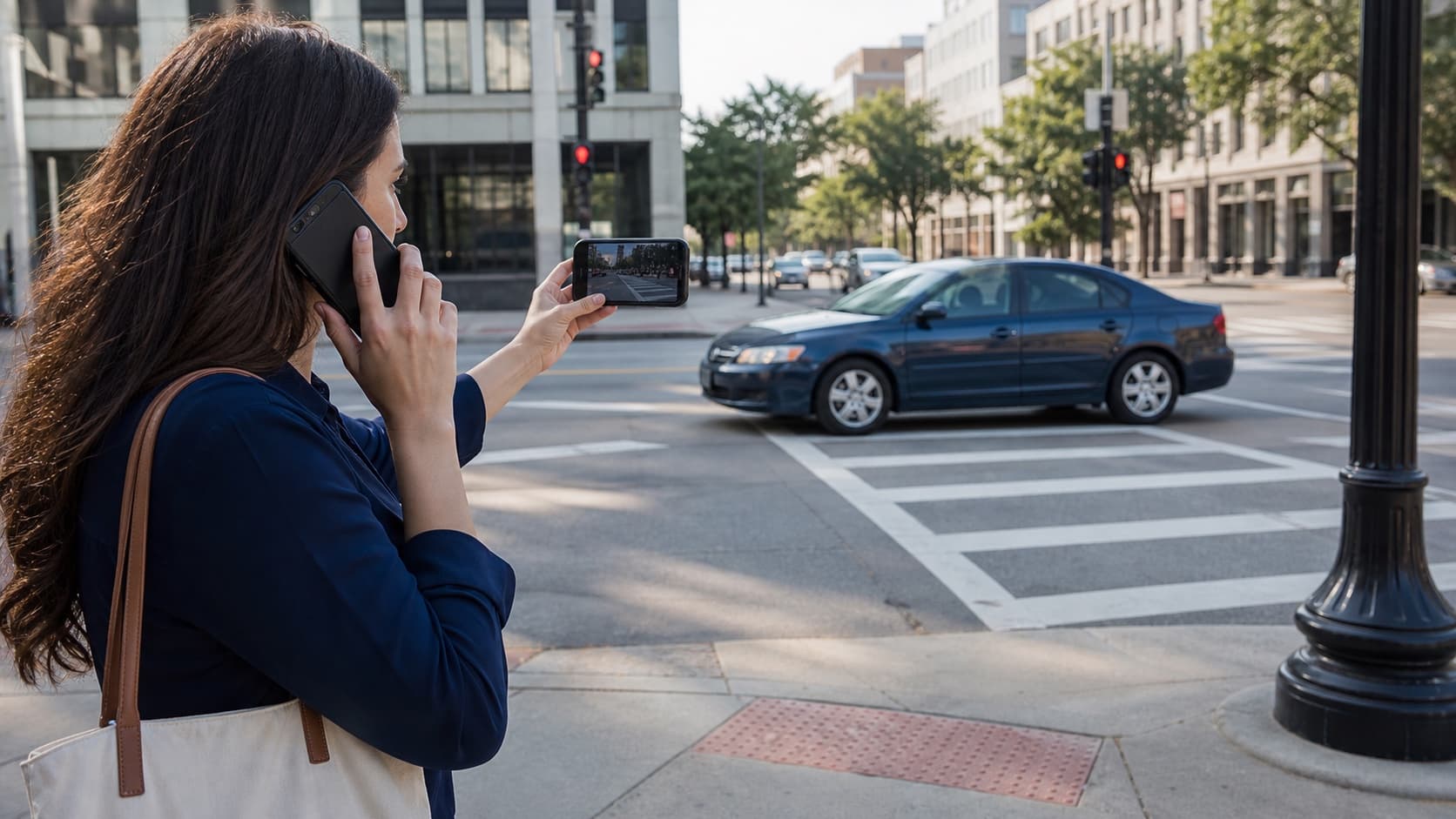
Measure and photograph the crossing route, curb ramps, medians, lanes, parked vehicles, signs, markings, signal heads, countdown display, lighting, vegetation, construction, obstructions, and the driver's approach. Obtain signal timing, traffic-camera preservation information, nearby business or residential video, 911 records, vehicle data, witness views, and roadway plans when relevant. A marked crosswalk is only one part of the legal and factual analysis.
State statutes and local ordinances can distinguish intersections, marked and unmarked crosswalks, midblock crossings, sidewalks, shoulders, school zones, transit stops, parking lots, and people using mobility devices. NHTSA safety guidance describes common risks but does not decide civil fault. Apply the current state and local rule to the actual location, signal phase, visibility, and conduct of every road user.
Comparative fault, contributory negligence, and defenses in North Dakota
North Dakota applies its own comparative-fault, allocation, contribution, and multiple-party rules. The effect of claimant conduct, settled parties, immune entities, employers, nonparties, intentional conduct, and different legal theories must be checked under current statutes and controlling decisions rather than inferred from another state.
A defense can focus on conduct, notice, causation, prior health, treatment gaps, mitigation, assumption of risk, misuse, release, immunity, employment, status, jurisdiction, evidence preservation, or procedure. An allegation is not proof. Preserve documents and physical evidence, identify the controlling rule, and answer accurately without guessing about facts that can be checked from records.
The state insurance-system feature that may affect this pedestrian accident claim
North Dakota uses no-fault personal-injury-protection benefits and a statutory threshold for certain claims against another driver. The first-party claim, threshold evidence, comparative fault, and liability coverage require separate analysis.
Whether that feature protects this injured person, vehicle, passenger, pedestrian, bicyclist, motorcyclist, worker, or commercial use must be checked under the exact statute and policy. PIP, no-fault, medical, liability, UM or UIM, workers' compensation, health coverage, and a third-party claim can use different notices, forms, proof, priority, offsets, and dispute paths.
Evidence to preserve for a North Dakota pedestrian accident claim
Preserve crosswalk and signal timing, sight lines, lighting, speed evidence, cameras, witnesses, clothing and personal items, vehicle damage, phone records, and roadway plans. Keep original files, metadata, report numbers, chain-of-custody information, downloaded records, and a dated evidence index. Do not edit an original, enter another person's account, stage a condition, or make a public post that could be mistaken for the complete record.
Send targeted preservation requests when a business, platform, insurer, employer, property controller, carrier, government agency, hospital, contractor, neighbor, device, vehicle, or camera system may overwrite or destroy relevant material. Identify the event, time range, location, person, account, vehicle, item, or camera precisely. A request does not guarantee access; formal process may still be required.
Insurance and benefit coordination in North Dakota
driver and owner liability, employer, rideshare, UM or UIM, household auto, medical, health, disability, commercial, and government coverage may apply. Obtain declarations, full policy forms, endorsements, named insureds, covered locations or vehicles, limits, deductibles, exclusions, notices, reservation-of-rights letters, denials, payment ledgers, and proposed releases. A card, declarations page, or phrase such as 'full coverage' does not state every controlling term.
Identify who is requesting a statement or authorization, whom that person represents, which claim and coverage are involved, and whether the communication is recorded. An injured person's own carrier may have cooperation provisions different from an opposing insurer's request. Be accurate, do not guess, limit authorizations to what is appropriate, and do not sign a release before every claim, policy, lien, and future need is understood.
Medical care, causation, and functional proof after pedestrian accident harm
Seek appropriate professional care and explain how and when the event happened. pedestrians can sustain multi-system trauma, fractures, head and spine injury, internal injury, scarring, mobility loss, and long-term rehabilitation needs. Keep emergency, primary-care, specialist, imaging, therapy, pharmacy, surgery, counseling, rehabilitation, restriction, referral, mileage, and billing records. Medical professionals—not an insurer or legal-information site—should decide evaluation and treatment.
Document the pre-event baseline, new symptoms, aggravation, diagnosis, treatment response, restrictions, sleep, mobility, concentration, work, school, caregiving, household activity, recreation, scarring, and future recommendations without exaggeration. A prior condition does not answer whether an event caused a new injury or aggravation, but the record must distinguish the histories and later events.
Economic loss, human harm, and damages under North Dakota law
North Dakota law determines which medical expenses, lost earnings, reduced earning capacity, property loss, replacement services, pain, impairment, disfigurement, consortium, wrongful-death loss, interest, cost, or other categories may be recovered and what proof, caps, immunities, or limitations apply. An online settlement average cannot substitute for the actual evidence and available recovery sources.
Save bills, explanations of benefits, payment records, liens, benefit ledgers, wage statements, pay stubs, tax records, schedules, attendance, job descriptions, restrictions, receipts, repair or replacement records, and future-care opinions. Evaluate the projected net recovery after fees, costs, liens, reimbursement, benefit credits, funding payoff, and authorized deductions—not only the headline offer.
North Dakota deadlines cannot safely be reduced to one number
A complete review can include an incident report, police or agency report, insurance notice, medical or PIP submission, administrative filing, government presentment, presuit notice, bodily-injury action, property claim, contract limit, wrongful death, survival claim, minor or incapacitated person, defendant death or bankruptcy, service, appeal, and cross-border issue. Different theories from the same event can have different clocks.
Create a dated chronology containing the event, discovery, report, treatment, insurer notice, denial, payment, policy receipt, benefit filing, government communication, demand, and every deadline letter. Negotiation, an open claim, continuing treatment, a pending agency investigation, or an insurer's promise to review does not necessarily suspend a statutory, administrative, or contractual period.
How a North Dakota pedestrian accident claim can become a lawsuit
Investigation usually comes first: classify the claim, identify parties and insurance, preserve evidence, obtain public and private records, document medical and financial loss, evaluate experts, and calculate deadlines. A demand may be presented when responsibility, causation, damages, liens, and coverage can be evaluated, but a filing deadline or urgent preservation issue can require earlier action.
North Dakota pleading, service, venue, discovery, evidence, expert, mediation, trial, post-trial, and appeal rules govern a state case. Defendants can dispute duty, breach, notice, control, causation, injury, damages, insurance, fault, immunity, or procedure. Federal court is available only when jurisdictional requirements are met. Settlement can occur at many stages, and no responsible source can promise a result.
Liens, reimbursement, settlement review, and pre-settlement funding
Health plans, government benefits, medical providers, workers' compensation carriers, disability plans, first-party insurers, and other payers may assert lien, reimbursement, offset, or credit positions. Confirm each claimed amount and legal basis, unresolved bill, future treatment issue, policy exhaustion, confidentiality term, release scope, indemnity promise, and proposed distribution before accepting a settlement.
Pre-settlement funding is not case proceeds and can be expensive. Request a written payoff at several realistic dates, including all fees and compounding or other charges; ask whether costs are capped; identify assignments and attorney acknowledgments; and compare benefits, insurance, hardship programs, payment plans, and ordinary credit. Funding does not increase case value and can substantially reduce the eventual net recovery.
Official North Dakota source and document checklist
Begin with North Dakota Department of Transportation crash-report resources, North Dakota Insurance Department, and North Dakota Century Code Title 39, Motor Vehicles. Then verify current civil procedure, evidence rules, appellate decisions, local ordinances, the actual policies, the narrower practice-specific authorities, and any government or administrative requirements.
Save the title, publisher, URL, effective or revision date, access date, and downloaded copy of every source used. Also preserve reports, correspondence, policies, photographs, video, witness details, physical evidence, medical and billing records, wage proof, contracts, inspection or maintenance materials, claim ledgers, offers, authorizations, and every signed or proposed agreement.
- Traffic and report authority: North Dakota Department of Transportation crash-report resources
- Controlling motor-vehicle source: North Dakota Century Code Title 39, Motor Vehicles
- Insurance regulator: North Dakota Insurance Department
- Confirm event-date law, claim-specific notice, jurisdiction, service, procedure, evidentiary foundations, and any administrative prerequisites.
How an injury claim and lawsuit usually move forward
Most matters begin with a confidential intake, conflict check, deadline review, investigation, medical-document collection, and insurance analysis. A lawyer may send preservation notices, request reports and records, interview witnesses, inspect physical evidence, identify every potentially responsible party, and evaluate whether experts are needed. A claim or demand may be presented before a lawsuit when the facts, medical condition, damages, and available coverage are sufficiently documented.
Filing a complaint begins the formal court process. The defendant is served and can answer, assert defenses, or challenge part of the case. Discovery may include written questions, document requests, depositions, subpoenas, inspections, medical examinations, and expert disclosures. Courts can decide legal issues in motions, while disputed facts may be reserved for a judge or jury. Negotiation and mediation can occur at several points, and many cases resolve without trial.
A settlement should be evaluated by the amount the client will actually receive after attorney fees, case costs, medical bills, liens, benefit reimbursement, and any funding payoff—not just the headline number. If the case goes to trial, the result depends on admissible evidence, governing law, credibility, judicial rulings, and the factfinder. Appeals generally address claimed legal error rather than starting the factual case over.
What compensation can include—and what has to be proved
Depending on the state and claim, recoverable damages may include reasonable medical expenses, lost income, reduced earning capacity, property loss, future care, pain, physical limitations, scarring, and other legally recognized harm. Wrongful-death, survival, workers' compensation, medical-negligence, government, and product cases can use different categories or limits. Punitive damages are not automatic and generally require a separate legal basis.
Proof matters as much as the category. Bills show charges but do not answer every question about necessity, payment, liens, future needs, or causation. Wage records, tax returns, schedules, employer statements, vocational evidence, photographs, journals, treating records, and qualified expert opinions can help document the economic and human impact. Prior conditions should be disclosed accurately so a lawyer can distinguish baseline health, aggravation, and unrelated problems.
Pre-settlement funding is optional and can reduce the net recovery
Some injured people consider an advance tied to expected case proceeds because they cannot work or are facing urgent bills. These products may be marketed as non-recourse funding rather than ordinary loans, and state treatment and contract terms vary. The label does not tell you the total cost. Ask for the complete agreement and a payoff table showing every fee and the dollars owed after several possible case durations.
Compare simple and compounded charges, time blocks, broker or origination fees, caps, assignment terms, dispute provisions, the result if the case recovers nothing, and whether the funder can influence settlement. Also compare hardship programs, insurance or disability benefits, provider payment plans, credit-union options, family assistance, and a smaller advance. Your lawyer can review how the agreement affects the case, but the financial choice should be made only after you understand the possible payoff and remaining net recovery.
Deadlines and legal rights are state-specific
Statutes of limitation are only part of deadline analysis. Accrual, discovery rules, presuit notice, government claims, medical negligence, minors, death, workers' compensation, product statutes, contractual terms, service, and tolling can change what must happen and when. Settlement discussions and insurance claims do not necessarily stop a filing deadline.
Use national pages for the framework and verified state pages for primary statute and court links. Then ask a lawyer licensed in the relevant state to calculate the actual deadline from the event date, claim type, parties, and current law. Do not wait for treatment to end or for an insurer to finish its review before asking.
Common questions
Which official sources govern a North Dakota pedestrian accident claim?
Start with North Dakota Century Code Title 39, Motor Vehicles, North Dakota Department of Transportation crash-report resources, and North Dakota Insurance Department; then verify civil rules, appellate decisions, local law, the actual policies, and the category-specific federal or state authorities.
What is the deadline for a North Dakota pedestrian accident claim?
There is no safe single-number answer. Claim type, age, defendant, government involvement, notice, accrual, tolling, insurance or contract terms, administrative process, service, and current law can produce different deadlines.
What if I may be partly responsible in North Dakota?
North Dakota applies its own comparative-fault, allocation, contribution, and multiple-party rules. The effect of claimant conduct, settled parties, immune entities, employers, nonparties, intentional conduct, and different legal theories must be checked under current statutes and controlling decisions rather than inferred from another state.
Should I give an insurance company or business a recorded statement?
Identify who is asking, whom that person represents, whether a policy creates cooperation duties, and which claim is involved. Be accurate, do not guess, and obtain advice before signing a broad authorization or release.
What evidence should I save first?
Start with crosswalk and signal timing, sight lines, lighting, speed evidence, cameras, witnesses, clothing and personal items, vehicle damage, phone records, and roadway plans. Preserve original files and identify evidence held by businesses, platforms, employers, property controllers, vehicles, government entities, health authorities, or camera systems before it is overwritten or changed.
How does an injury claim become a lawsuit?
After investigation, evidence preservation, party and insurance identification, medical and damages documentation, and deadline review, counsel may present a claim or file a complaint. Service, discovery, experts, motions, mediation, trial, and appeal follow the controlling court rules.
Can an injury case involve pre-settlement funding?
Funding may be available in some represented cases, but it can reduce the net recovery substantially. Compare the amount advanced with written payoff figures at realistic dates and have the agreement reviewed before signing.
Will the intake remember North Dakota and the pedestrian accident category?
Yes. This page initializes North Dakota and Pedestrian accident in the confidential intake context. The city, ZIP code, state, and incident type can be corrected during intake.
Does submitting an intake hire a lawyer?
No. LawIntaker provides public information and intake routing. An attorney-client relationship begins only if a participating law firm accepts the matter in writing.
Sources and references
This guide uses primary public sources for safety, medical, regulatory, and insurance context. State law and individual facts can change the legal answer.
- North Dakota Century Code Title 39, Motor VehiclesNorth Dakota official legislative or state legal source
- North Dakota Department of Transportation crash-report resources: reports, records, and traffic resourcesNorth Dakota Department of Transportation crash-report resources
- North Dakota Insurance Department: insurance consumer resourcesNorth Dakota Insurance Department
- North Dakota government and state-agency directoryUSA.gov
- Pedestrian safety and crash informationNational Highway Traffic Safety Administration
- State traffic-record and crash-data systemsNational Highway Traffic Safety Administration
- Traumatic brain injury signs and symptomsCenters for Disease Control and Prevention
- Civil cases in the federal courtsAdministrative Office of the U.S. Courts
- Personal loans consumer resourcesConsumer Financial Protection Bureau
- Event data recorder informationNational Highway Traffic Safety Administration
- Federal, state, county, and municipal courtsUSA.gov